Top Sellers
-
![Clara Schumann Trio for clarinet, cello, and piano]()
$19.95 $17.96
-
![Scherzo N.1 Op.10 in D minor]()
-
![Three Romances for Violin and Piano, op. 22]()
-
![Quatre Pieces fugitives, Op. 15]()
-
![Quatre Pieces fugitives, Op. 15]()


-
![Trio, Op. 17]()
$15.95 $14.36
-
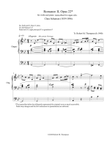
![Drei Romanzen op. 11]()
$3.95
-
![Clara Schumann-Three Romances,Op.22,for Violin and Piano]()
-
![Ich stand in dunklen Träumen Op 13 N1 in C major (Lower key)]()
-
![Ich stand in dunklen Träumen Op 13 N1 in F major (Higher key)]()
-
![Scherzo in C Minor, Op. 14 No. 2]()
$5.99 $5.39
-
![Cadenzas to Piano Concertos]()
$13.95
-
![Scherzo In G Major]()
$5.99
-
![Polonaise In C Major]()
$5.99
-
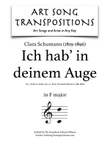
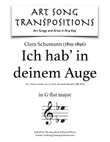
![SCHUMANN: Ich hab' in deinem Auge, Op. 13 no. 5 (transposed to B major)]()


-
![SCHUMANN: Ich hab' in deinem Auge, Op. 13 no. 5 (transposed to F major)]()
-
![SCHUMANN: Ich hab' in deinem Auge, Op. 13 no. 5 (transposed to G-flat major)]()
-
![Romantic Piano Music]()
$31.95
-
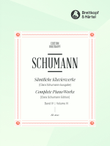
![Piano Music of Robert Schumann, Series III]()
-
![Clara Schumann]()