About Bee Gees
The Bee Gees were an iconic British pop group comprised of brothers Barry, Robin, and Maurice Gibb, who achieved global superstardom through their evolving sound and distinctive vocal harmonies. Emerging in the late 1960s with a Beatles-inspired pop and rock sound, they transitioned dramatically in the mid-1970s to become synonymous with the disco era. Their innovative use of tight three-part harmonies and Barry Gibb's signature falsetto became a defining characteristic of their music, establishing them as one of the best-selling music artists of all time and cementing their profound significance in music history.
- The Gibb brothers were born on the Isle of Man, started their musical journey in Manchester, England, gained early success in Australia, and then returned to the UK in 1967 to achieve international fame.
- The Bee Gees are among the best-selling music artists globally, with estimated record sales ranging from 120 million to 250 million.
- Their soundtrack for the 1977 film "Saturday Night Fever" became one of the best-selling albums in history and was critically acclaimed, earning them multiple Grammy Awards, including Album of the Year.
- Beyond their own hit recordings, the Bee Gees were prolific songwriters, penning chart-topping songs for other artists, such as "Grease" for Frankie Valli and "Islands in the Stream" for Kenny Rogers and Dolly Parton.
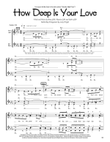
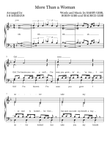
Playing the music of the Bee Gees offers a rewarding experience for musicians of various skill levels. Their sheet music is widely available in arrangements for piano, vocals, and guitar, often including vocal melodies, piano accompaniments, lyrics, chord names, and guitar chord diagrams. Performers can delight in their harmonious vocals, memorable melodies, and rhythmic appeal, which span genres from pop ballads to energetic disco. The intricate three-part harmonies, often featuring Barry Gibb's remarkable falsetto range, provide a stimulating challenge for vocalists, while their catchy tunes make for engaging instrumental performances.